
 Spanish

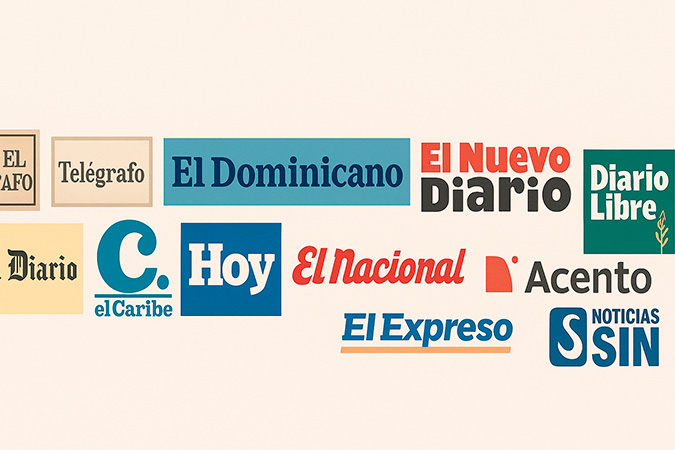

Before the printing press, journalism in Santo Domingo was oral or handwritten, but by the mid-16th century, loose sheets—pamphlets critical of the Spanish authorities—were circulating, which anticipated written journalism. These libels, with a mocking tone and without institutional endorsement, emerged as the only way to point out abuses by the Government and the Royal Audience.
The Arrival of the Printing Press and the First Newsletters (c. 1800)
The Gutenberg printing press took time to be established on the island: various accounts place it between 1783 and 1796, thanks to printers like André Joseph Blocquerest. However, the first journalistic print was El Boletín de Santo Domingo (1807–1809), bilingual and focused on the war against Louis Ferrand. Despite its link to the French government, it marked the beginning of the printed press on Dominican soil.First Creole Newspapers and the Ephemeral Independence
In April 1821, José Núñez de Cáceres launched El Telégrafo Constitucional and El Duende, weeklies that combined information and political opinion, first edited in the official printing press and later in private workshops. They were pioneers in including advertising and in reflecting the independence impulse that would give rise to the ephemeral independence of December of that year.Freedom of the press and the rise of the newspaper in the First Republic (1844–1861)
With the definitive independence (February 27, 1844) and the Constitution of November, freedom of the press was enshrined. On September 19, 1845, El Dominicano, the first newspaper of the new nation, was born, although it only published 24 editions. In Santiago, El Correo del Cibao (1851) introduced provincial journalism, while the political group dominated the editorial line of almost all media.Professionalization and modernization at the turn of the century
Around 1882, El Telegrama inaugurated journalism, and the Dominican Press Association (1883) laid the foundations of professional ethics. In 1889, Arturo Pellerano Alfau founded Listín Diario Marítimo, the first major national newspaper, neutral in political struggles and a pioneer in corporate press. The arrival of telegraphy and radiotelegraphy at the beginning of the 20th century allowed the incorporation of international news instantly.Dictatorships, Censorship, and Resistance (1887–1961)
During the tyranny of Ulises Heureaux ("Lilís", 1887–1899) and the Trujillo regime (1930–1961), the press suffered a "gag law" and government control. Many newspapers closed or became official mouthpieces, while brave journalists defied repression with clandestine editions and pamphlets. The exile of communicators and the closure of media illustrate the high cost of practicing journalism in times of prior censorship.Democratic Transition and Digital Explosion
With the fall of Trujillo (1961) and the arrival of Juan Bosch, the press regained freedoms, El Nacional (1966) was born and investigative journalism flourished. From the 2000s onwards, the free press (Diario Libre, El Día) and digital portals (clavedigital.com, Noticias SIN, Acento) transformed information consumption. Current cyberjournalism combines social networks, multimedia and citizen journalism, redefining the concept of “daily” and expanding access to information.Challenges and Perspectives of Written Journalism
Today, the Dominican press coexists with a multimedia ecosystem that demands adaptability, transparency, and rigor. Maintaining quality in the face of economic pressure from digital advertising, combating misinformation, and taking advantage of new technologies —AI, data journalism, podcasts— are the great challenges for written journalism to remain a pillar of democracy and a faithful reflection of society.1. Colonial Era and First Contact with the Printing Press
- Pamphlets and libels (16th–18th centuries): burlesque critiques of the Government (e.g. Bejarano's pamphlets in 1550; libels against Antonio Osorio).
- Late printing press (c. 1783–1796): workshops of Moreu de Saint-Mery (1783) and Padrón (1796) according to their chronicles.
2. Early printed news items (1801–1809)
- “El Boletín de Santo Domingo” (1807–1809): bilingual (Spanish/French), linked to the French government.
3. Pro-Independence Weeklies (1821)
- The Constitutional Telegraph (Apr 15, 1821)
- The Goblin (Apr 15 – Jul 15, 1821): first use of advertising in its editions 9 and 10.
4. First Republic and Political Press (1844–1861)
- El Dominicano (Sep 19, 1845; 24 editions)
- El Correo del Cibao (Jul 10, 1851)
- Sporadic manuscripts (1834–1844): El Dominicano Español, La Chicharra, El Grillo Dominicano
5. Professionalization and nascent journalism (1861–1882)
- La Razón (2 may 1862) and El Boletín (10 ene 1864–jul 1865) during The Restoration
- El Telegrama (1882): first daily newspaper in the country
- Dominican Press Association (1883)
6. Rise of the Major Newspapers and Technology (1889–1915)
- Listín Diario Marítimo (1 ago 1889) → then Listín Diario
- El Diario del Ozama, El Decano de la Prensa Dominicana
- El Día (11 jul 1891, Santiago)
- El Porvenir (1872, Puerto Plata)
- El Eco de la Opinión (1883)
- La Información (16 nov 1915, Santiago)
7. Media during the Ulises Heureaux dictatorship (1887–1899)
1882–1899 numerous short weeklies and dailies emerged, including:makefileCopiarEditar1882: El Eco del Pueblo
1883: Diario del Ozama, El Teléfono, El Aprendiz, El Ensayo, El Volteriano, La Trompeta
1884: El Voto Libre, El Gladiador, El Avisador Comercial, Pluma Libre, El Progreso
El Derecho, La Bandera Nacional
El Adalid, El Eco de Moca, El Oasis
1887: El Orden, Boletín Municipal
1889: Boletín de Debates, La Claridad, Listín Diario Marítimo
1890: El Demócrata, La Hoja Diaria
1891: El Gorro de Dormir, El Clamor Nacional, La Avispa
1892: La Bola de Fuego, El Simbolismo
1897: El Bufón, El Eco de la Patria, El Anunciador
1899: El Pacificador, El Coño
8. U.S. Occupation and Resistance (1916–1924)
- Military Censorship Law and “The Censor's Pencil”
- They stand out in the press: Listín Diario, El Tiempo, Diario Nacional, La Información (suspended several times)
- Press Congress (1920) as an act of civil disobedience
9. Trujillo Era: Propaganda and Control (1930–1961)
- La Nación (1940) → official newspaper of the regime
- El Caribe (Apr 14, 1948) → sponsored by Trujillo
- Other social, sports, and cultural supplements and brochures
- Murders and exiles of critical journalists
10. Democracy and Diversification (1961–2000)
- El Nacional (September 11, 1966)
- Hoy, El Nuevo Diario, El Nuevo Diario (founded 1988)
- Several evening and provincial newspapers return to freedom of the press
11. Free and Digital Press (2001–present)
- Diario Libre (2001)
- El Expreso (2001) from Listín Diario
- Última Hora (free 2001–2002)
- El Día (free since 2002)
- clavedigital.com (2004) → first investigative digital newspaper
- La Información
- Main portals and aggregators: Almomento, Z101 Digital, Acento, Noticias SIN, Dominicanoshoy, Impacto Deportivo, 7días, Ciudad Oriental, Puerto Plata Digital, Noticias24Horas, Diario Digital RD, El Masacre, Puerto Plata Habla, Noti Sur Baní, El Java, El Siembra Hielo, Dajabón 24 horas, Diario Dominicano, La Columna de Walker, Las Principales, Diario Noticias…
- Social networks and “citizen journalism” as new channels of dissemination





