Gaspar Hernández, Espaillat. – The Minister of Housing, Habitat and Buildings, Ito Bisonó, moved this Friday to Gaspar Hernández to verify firsthand the damage caused by the intense rains and the overflow of the Joba River, a situation that has affected homes and part of the municipality's surroundings. The visit takes place at the instructions […]
Santo Domingo. - President Luis Abinader offered this Friday his sixth accountability before the National Assembly, with an approximate duration of 2 hours and 44 minutes (2:44:00), which makes it the most extensive of his entire administration. The speech of this 2026 had about 19,549 words, which, according to the average reading speed, translates to […]
Santo Domingo.- The National Association of Young Entrepreneurs (ANJE) considers that the accountability presented by President Luis Abinader exposes a broad vision of public policies aimed at economic growth, productive transformation, and the modernization of the State. In a context of macroeconomic stability and accelerated changes in the global environment, the main challenge for 2026 […]
Padre Las Casas, Azua.— Councilman Sandy Báez considered President Luis Abinader's accountability speech positive and guiding, highlighting the clear definition of objectives, the progress presented, and the commitment to the country's sustainable development. According to Báez, the president's message reflects a management based on transparency, responsibility, and a strategic vision oriented towards economic growth, institutional […]
Santo Domingo.- The Dominican Institute of Telecommunications (Indotel), the Mayor's Office of the National District (ADN) and the Unified Council of Electricity Distribution Companies (CUED) agreed to move forward with the removal of unused and obsolete aerial cabling, as well as the ordering of the infrastructures that affect the urban image and the safety of […]
SANTO DOMINGO.– Guatemalan Yesid Pira prevailed with authority in the demanding third mountain stage of the 47th National Independence Cycling Tour, held on the Santo Domingo–Rancho Arriba (San José de Ocoa) route, with a distance of 158 kilometers. You may be interested in:National Independence Cycling Tour: Wilmer Paredes wins the second stage; Cedeño retains the […]
SANTO DOMINGO. – Colombian Wilmer Paredes starred in an explosive finish to win the second stage of the 47th Vuelta Ciclística Independencia Nacional on Wednesday, while Dominican Danielky Cedeño retained the lead in the general classification. You may be interested in:National Independence Cycling Tour: Danielky Cedeño conquers the first stage in La Romana The stage […]
SANTO DOMINGO, R.D. – Within the framework of the celebrations for the Month of the Homeland, the National Institute of Physical Education (INEFI) organized this Tuesday a student march that brought together more than 600 high school students, from 30 educational centers in the National District. You may be interested in:Dominican Republic will host the […]
Washington. – Legendary boxers Floyd Mayweather Jr. and Manny Pacquiao will face each other again on September 19 in Las Vegas, United States, eleven years after starring in one of the most media-covered fights in the history of professional boxing. You may be interested in: Font wants to name Messi honorary president and have him […]
Santo Domingo. – Cap Cana Destination City and the Ministry of Tourism of the Dominican Republic announced the details of the second edition of the Dominican Republic Open – Cap Cana ATP Challenger 175, which will be held from March 9 to 15, 2026, reaffirming the country as a key point within the international professional […]
Santo Domingo.- President Luis Abinader informed, during his accountability, a series of strategic agreements with global technology companies that consolidate the Dominican Republic as a key destination for the economy of the future, innovation and high value-added investment. As part of the vision of sustainable growth and productive diversification, the president highlighted the signing of […]
New York, Feb 26 (EFE).- Instagram has announced that "next week" it will begin to notify parents if their teenage child "attempts to repeatedly search for terms related to suicide or self-harm" on its social network, according to its parent company, Meta, announced this Thursday. You may be interested in: Keys to the Seedance phenomenon, […]
Beijing.- A year after DeepSeek shook the global artificial intelligence (AI) industry with its 'chatbot', China returns to the center of the technological debate with the hyperrealistic videos of Seedance 2.0, ByteDance's video tool that opens a new battle in the sector and rekindles the controversy over copyright in Hollywood. Since its launch this month, […]
Security in web browsers is more crucial than ever, as they have become one of the main targets of cybercriminals. Chrome, the most used browser worldwide, constantly faces attempts to exploit vulnerabilities, forcing Google to quickly release patches to protect its users. Recently, the company has released an emergency update that fixes the first zero-day vulnerability of […]
Santo Domingo.– HONOR positioned itself as the fastest-growing international smartphone manufacturer in 2025, recording an expansion of 55% in shipments during the first three quarters of the year, according to a report by the analysis firm Omdia. The study places the company as the most dynamic brand among the top 10 global sellers, driven by […]
A Bolivian Air Force plane crashed this Friday in the city of El Alto, in the metropolitan area of La Paz, and local authorities requested emergency assistance to address the situation, according to reported by the Bolivian media outlet El Deber, while the number of victims and the causes of the accident had not yet […]
Caracas,.- A total of 133 Venezuelan migrants arrived this Friday in their country on a repatriation flight from the United States, reported the Ministry of Interior and Justice. In its Telegram channel, the institution detailed that, of the total, 100 are men, 28 are women, four are children and one is a teenager. You may […]
Washington.- U.S. President Donald Trump, assured this Friday that his country could opt for a "friendly takeover of Cuba", amid tensions with the island over the energy blockade imposed by Washington. "They have nothing right now, but they are talking to us, and perhaps we will have a friendly takeover of Cuba. We could end […]
Miami (USA).- The United States Department of Justice (DOJ) announced this Friday the arrest of 25 more people for protesting against the Immigration and Customs Enforcement (ICE) at a church in Minnesota in January, in which journalist Don Lemon, who worked at CNN, was also arrested. U.S. Attorney General Pam Bondi revealed that the DOJ […]
Pope Leo XIV has asked priests to stop using artificial intelligence to write their sermons, arguing that it "will never be able to share the faith", reports Vatican News. The pontiff made the call during a closed-door meeting with clergy from the Diocese of Rome, including some of the Vatican's highest-ranking advisors and local priests. […]
The Dominican film “ZUMECA” produced by Cacique Films and sponsored by Grupo SID, won two awards at the Slamdance Film Festival, achieving the Grand Jury Prize and Best Actress for Angela Cano. The film directed by the also actor David Maler premiered within the framework of this prestigious circuit, after entering the "Breakouts" section of […]
Santo Domingo, RD.- Businessman Santiago Matías publicly reacted to the statements of communicator Caro Brito about the new season of the program “Sin Filtro Radio Show”, a space she was previously a part of. The controversy arose after Brito expressed that she does not like the current stage of the project, generating a direct response […]
Miami, FL —. Dominican artist Damn Goldo presents “El Soberano”, a single with an Afro-Caribbean essence that marks the beginning of a new artistic stage and reaffirms his cultural identity at a key moment for the national conversation. The release serves as a prelude to his next EP, scheduled for the end of March 2026. […]
Miami, FL. – Days after its release, POR SI MAÑANA NO ESTOY has established itself as a global force, with Omar Courtz achieving one of the biggest album debuts of the year, surpassing over 278 million combined streams just days after its release. The second debut project debuted at #1 on Spotify's Top Global Debut […]
The successful production debuted in Turkey and will premiere on Monday, March 2nd at 8:00 PM on the Dominican television station. The television station Color Visión announced the exclusive premiere in the Dominican Republic of the Turkish telenovela Golden Boy, a production that debuted in Turkey and that, after its international success, has been sold […]
Although the Central Electoral Board has not officially kicked off the presidential pre-campaign for 2028, the Dominican political scene shows unequivocal signs of early activation. The main parties are moving as if the contest were underway, multiplying events, refining speeches and appealing to polls to legitimize positions, in a context where public opinion is beginning […]
A country can ignite from a chat: WhatsApp sets the agenda before the media. A single forward surpasses any headline. In the digital age, the real information crisis doesn't ignite in the newsrooms of a media outlet, nor on the front pages of newspapers: it begins in a simple WhatsApp chat. Before any media outlet […]
In the Dominican Republic, presidents don't fall because of the opposition. They fall because of something more intimate and devastating: their own family. When corruption shares the same last name as the presidential band, it ceases to be a case and becomes a sentence. It's not a contract that is judged: it's the entire credibility […]
In 2015, an internal crisis within the Dominican Liberation Party (PLD) forced the leadership of that organization to promote a constitutional reform to enable President Danilo Medina, who had been elected in 2012 through a constitution that prohibited consecutive re-election. Medina was eligible to try to return in 2020, that is, after a period, a […]
For days, Leonardo Aguilera has been the target of a campaign as evidently coordinated as it is poorly executed. Defamation, slander, and half-truths circulate on networks and certain media with suspicious synchronicity. Who's sending them? Who's biting their nails? The formula is old: fabricate scandals where they don't exist, repeat lies until they seem like […]
Santo Domingo.- The President of the Dominican Republic, Luis Abinader, expressed optimism this Friday about the country's economic future, announced that the Government will install a network of dry ports on the border with Haiti, and highlighted that the nation has a rare earth reserve of over 150 million tons. In his annual address on […]
Santo Domingo. — The political leader Tomás Hernández Alberto stated that in the Dominican Republic “nowadays you can buy more with the salary than what you could buy four years ago”, referring to the impact of salary increases compared to inflation, during the special broadcast of the newspaper De Último Minuto. Hernández Alberto explained that, […]
President Luis Abinader announced in his accountability report this Friday that the Dominican government signed a historic agreement with the American company LOD Holdings for the development of a commercial spaceport in Oviedo, in Pedernales. "Before May 2028, we are going to send a satellite or a rocket from Pedernales, so they believe it," the […]
Santo Domingo.- Dominican Republic decided to maintain its interest rate at 5.25% annually, after analyzing the recent increase in "uncertainty" global in the commercial policy of the United States, as well as the "inflation" recorded in the supply of food prices. The Dominican Central Bank issued this Wednesday a document in which it reported that […]
The president of the Board of Directors of the National Commission for the Defense of Competition (ProCompetencia), María Elena Vásquez Taveras, urged the business community to approach the institution and learn about the tools available to address market distortions, unjustified barriers to trade, and practices that limit fair competition. He affirmed that, beyond sanctions, which […]
Bogotá, Colombia.- The Minister of Tourism, David Collado, inaugurated the Dominican stand at the tourism fair La Vitrina de ANATO, which began this Wednesday in Bogotá, Colombia and will run until Friday. Accompanied by businessmen, bankers, diplomats and other sector actors, Minister Collado cut the ribbon, after assuring that he will continue making his greatest […]
Madrid, Spain.- Dominican journalist Cristian Santana presented a new installment of his program Sabor de la Calle, this time broadcasting from the city of Madrid, where he toured some of the most emblematic gastronomic points of the Spanish capital, combining local tradition with the authentic flavor of the Dominican community abroad. During the tour, Santana […]
Miami, Florida. — In a context where artificial intelligence redefines competitiveness globally, Dominican Jack Mateo, developed a strategic agenda at the Miami Dade College (MDC), focused on training in AI applied to the business sector. The AI expert held a meeting with Pedro Santos, Executive Director of Emerging Technologies at MDC, in which initiatives aimed […]
Santo Domingo. – The General Directorate of Livestock, headed by its director, Abel Madera, made a solemn floral offering at the Altar de la Patria, as part of the commemorative acts of the 182nd anniversary of the National Independence. The ceremony was held in honor of the Founding Fathers: Juan Pablo Duarte, Francisco del Rosario […]
A sleep specialist assures that intimacy before bed can promote a deeper and more restorative rest. According to the specialist, if a person has difficulty falling asleep, having sex before sleeping could help them relax and sleep better during the night. The benefit is not solely due to physical effort. When intimacy occurs with someone […]
If anything has been highlighted by the prolonged Haitian crisis, it is the historical debt that the Dominican Republic has with its own border. The provinces that guard that line of more than 390 kilometers not only face the direct consequences of the collapse of the Haitian state, but have also been, for decades, forgotten […]
Without a doubt, the tourism sector represents one of the greatest successes of the governments of President Luis Abinader, an area that he already knew well before his arrival at the Presidency of the Republic, due to his experience as a local businessman. Since his swearing-in in August 2020, the Tourism Cabinet was implemented, coordinated […]
This July 4th, the United States commemorates the 249th anniversary of its independence, a date that marks the beginning of a nation forged in the fight for freedom, civil rights, and self-determination. Since then, this feat has been celebrated in multiple cultural expressions that exalt patriotic pride and the sense of national belonging. However, on […]
Today we proudly and gratefully celebrate the fourth anniversary of De Último Minuto, a project that was born with the firm conviction of transforming the way information is reported in the Dominican Republic. In these four years, we have witnessed —and been protagonists— of a revolution in digital journalism, marked by immediacy, technological innovation, and […]
On the eve of celebrating the fourth anniversary of De Último Minuto, we reaffirm our commitment to innovation, technology and, above all, to you: our readers. We are driven by the constant desire to evolve, to do things differently and to keep up with the times. Therefore, today we present two new products that will […]
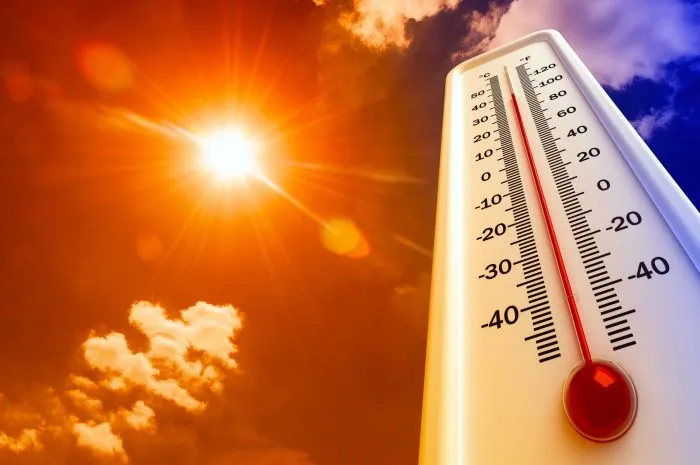
Berlin.- May 2025 became the second warmest month ever recorded worldwide, according to the monthly report of the Copernicus Climate Change Service. The average global air temperature reached 15.79 degrees Celsius, which is 0.52 degrees above the 1990-2020 average.
Although this figure represents a slight decrease of 0.12 degrees compared to May 2024, it is still 1.40 degrees higher than the average of the pre-industrial period (1850-1900). This difference interrupts a series of 21 consecutive months with global temperatures exceeding 1.5 degrees above pre-industrial levels, a critical threshold established by the Paris Agreement.
"May 2025 breaks an unprecedented long sequence of months above 1.5 °C pre-industrial," noted Carlo Buontempo, director of the Copernicus program. However, he warned that it is only "a brief respite for the planet" as global warming continues its course.
In Europe, the average temperature was 12.98 degrees Celsius, 0.29 degrees below the 1991-2020 average. The continent experienced a notable thermal contrast: while Eastern Europe, from eastern Italy and the Balkans to Finland, recorded below-average temperatures, Western Europe experienced a warmer-than-usual May.
Furthermore, May was exceptionally dry in northern and eastern Europe, including regions of central Europe, southern Russia, Ukraine, and Turkey. Copernicus highlights that several areas of northwestern Europe faced the lowest levels of precipitation and soil moisture since 1979.
In contrast, parts of southern Europe, areas of Fennoscandinavia and regions of western Russia experienced wetter-than-normal conditions.
Warm and dry boreal spring
The boreal spring of 2025 (March to May) was the second warmest ever recorded, with an average temperature 0.59 degrees above the 1991-2020 period average. It was also drier than usual in large areas of the northern hemisphere, including North America, non-tropical South America, Central Asia, and southern Australia.
In other parts of the world, May temperatures were higher than normal in West Antarctica, the Middle East, Western Asia, northeastern Russia, and northern Canada. In contrast, lower temperatures were recorded in India, Alaska, southern Africa, and eastern Antarctica.
Worrying ice retreat at the poles
Copernicus also highlighted the worrying state of the polar ice. In the Arctic Ocean, the ice extent was 2% below average, the ninth lowest value for a month of May since satellite records exist. The largest anomalies were observed in northern Eurasia.
In the Antarctic Ocean, the ice extent was 9% below average, ranking as the fifth lowest value for this month.
Warming Oceans
The sea surface temperature reached 20.79 degrees Celsius, the second highest value for May on record, only 0.14 degrees below the record set in May 2024. This ocean warming remains a strong indicator of the advancement of climate change and its prolonged effects on the global climate system.
The Copernicus report confirms that, although there was a slight thermal moderation in May, the global trend continues to be one of accelerated warming, with increasingly visible and persistent impacts on the planet's climate balance.
El mes de mayo fue el segundo más cálido del planeta, según Copernicus
Tokyo.- Three decades have passed since the Japanese Satoshi Tajiri turned his childhood hobby of collecting insects into the Pokémon phenomenon, the video game franchise that this Friday celebrates its anniversary with a return to the region where 'pocket monsters' as emblematic as Pikachu, Charizard or Bulbasaur were born. The original titles of the franchise […]
La Romana.— With the participation of civil, military, educational, and community authorities, Dr. Carmen Jiménez, provincial director of Public Health (DPS) of La Romana, participated this Friday, the 27th, in the commemorative acts of the 182nd anniversary of the National Independence of the Dominican Republic. During the commemoration, the authorities highlighted the legacy of the […]
Santo Domingo.– President Luis Abinader proclaimed that “caring for nature is a moral obligation”, when presenting the progress made by the Ministry of Environment and Natural Resources during his 2026 Accountability Speech before the National Assembly. The leader maintained that development cannot be measured solely by economic growth, but also by ecological balance and responsibility […]
Every February 27th, the Dominican Republic dresses up to commemorate its national independence with a solemn display of patriotism, discipline, and tradition: the military parade organized by the Ministry of Defense and the different military institutions of the country. More than an exhibition of impeccable uniforms and synchronized formations, this ceremony constitutes a living expression […]
Santo Domingo.- A total of 1,210 people, including women and minors, were rescued from gender-based violence situations and protected in Shelters during the last year, President Luis Abinader reported when presenting his Accountability Report before the National Assembly, within the framework of the 182nd anniversary of National Independence. The leader reaffirmed his government's "unwavering" commitment […]
Samaná.— Regarding the 182nd anniversary of the National Independence of the Dominican Republic, the director of the Educational District 14-04, Adalberta Lucía Calcaño Maldonado, highlighted the importance of this date as an opportunity to reflect on the patriotic and educational commitment that unites the entire school community of the province. The official pointed out that […]

 Spanish