
 Spanish

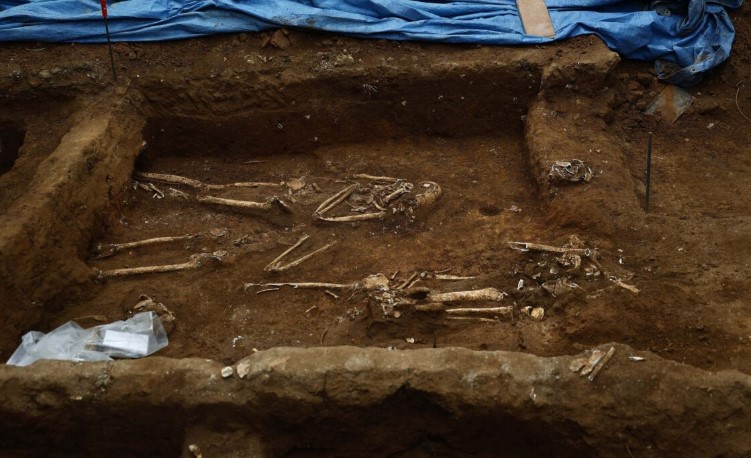

Santo Domingo.- The National Directorate of Monumental Heritage (DNPM) reported the discovery of human remains in front of the Church of Our Lady of Carmen, in the Colonial City of Santo Domingo, during excavation work for the installation of an electrical transformation center.
According to the entity, the remains would correspond to religious burials carried out between the 17th and 18th centuries, a common practice in colonial times, when it was frequent to bury Catholic faithful around churches. This custom lasted until the opening of the Cemetery of Independencia Avenue in 1824, at which time stricter regulations for urban burials began to apply.
You may be interested in: Discovery of bone remains in front of church surprises in the Colonial Zone
Despite the historical relevance of the finding, no tombstones or inscriptions were found to identify the deceased, which, according to the DNPM, was common in popular cemeteries of the time. In addition to the human remains, fragments of pottery were discovered, reinforcing the theory of a funerary context associated with the religious life of the colonial period.
The Iglesia del Carmen, built in 1615 by the Hermandad de los Remedios y del Carmen, was erected on the grounds of the former Hospital de San Andrés. Historical records indicate that the first burials in that area began around the mid-1660s.
The DNPM assured that this finding will not significantly affect the schedule of the underground project, as the time allocated to archaeological investigations was considered from the beginning of the urban intervention plan.





