
 Spanish

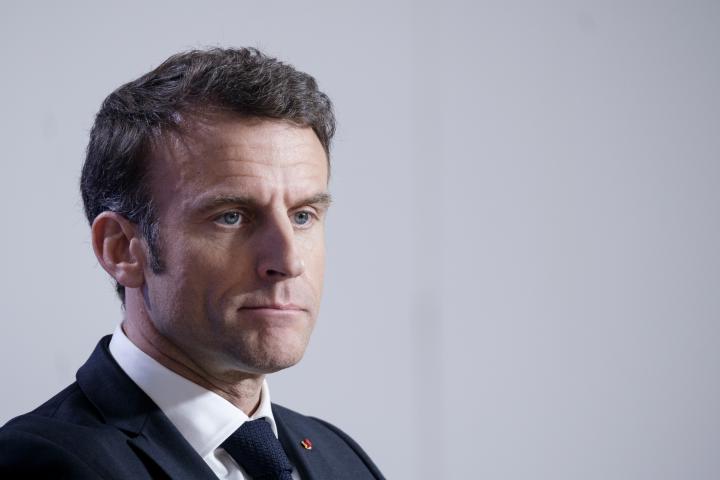

“If you want to be feared, you must be powerful”, he said, calling for the “mobilization” for national defense by all government departments. And he added: “Everyone must be present at their battle stations (...) We are still ahead, but if we maintain the same pace tomorrow they will overtake us”.
French military and security officials have been warning about the global threats facing France, and the Chief of the Defence Staff, Thierry Burkhard, said on Friday that Russia posed a “durable” threat to Europe and that the “range of European countries in the world of tomorrow” was being decided in Ukraine, invaded by Russia in 2022. Currently Russia considers France as its “main adversary in Europe”, Burkhard affirmed. He also warned about the consequences of reduced U.S. engagement with Europe, along with cyber threats, disinformation campaigns, and the risk of terrorist attacks. "We have to take into account the fact that there has been a change in the strategic parameters," he acknowledged.For his part, this Sunday the Minister of Defense, Sébastien Lecornu, intervened and told the weekly La Tribune that “it is our job to provide answers”. France must make “a new effort” if it does not want to “depend on anyone” in the future, the minister affirmed.
France's defense budget has already increased considerably since Macron took power, rising from 32.2 billion euros ($37.6 billion at the current exchange rate) in 2017 to 50.5 billion currently, and is projected to reach 67 billion euros in 2030.
If confirmed, the significant increase in defense spending could, however, threaten French efforts to reduce deficits and decrease its mountain of debt, amid pressure from the European Commission on Paris to impose greater fiscal discipline. Only the French debt service will cost the Treasury 62 billion euros this year. But the Prime Minister, François Bayrou, who will present his budget plan for 2026 on Tuesday, has stated that the defense budget is “sacrosanct” and exempt from budget cuts. In his Sunday speech, Macron rejected any financing of additional defense spending through additional debt. Several countries in NATO are increasing their military spending, after the alliance members agreed last month to spend five percent of their gross domestic product (GDP) on security. Great Britain intends to increase its defense budget to 2.5 percent of GDP by 2027 and to 3 percent after 2029. Germany plans to reach a defense budget of 162 billion euros by 2029, equivalent to 3.5 percent of its GDP, while Poland already dedicates 4.7 percent of GDP to defense. "It is clear that today we must review our programming and strategy, in light of the changing nature of risks," Macron said on Thursday. This month, Lecornu detailed the most urgent needs of the French armed forces, including ground-to-air defenses, ammunition, electronic warfare, and space capabilities. In Sunday's interview, he said that France was mainly concerned about falling behind in "disruptive technologies," including artificial intelligence and quantum technology. Beyond budget increases, the French government is also seeking to boost “national cohesion” in the face of global crises, officials at the Élysée said. Macron is expected to outline a possible mobilization campaign for young people who should be given "an opportunity to serve," Elysée officials said.




