
 Spanish

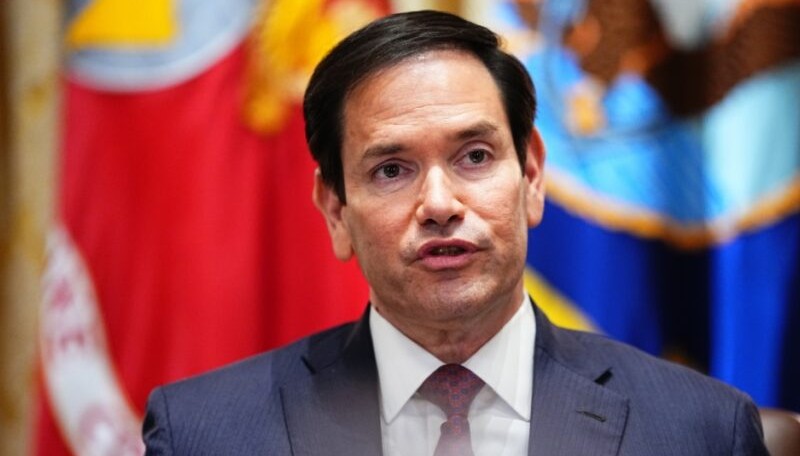

U.S. Secretary of State Marco Rubio on Thursday rejected criticism of his country's military deployment in the Caribbean and asserted that he does not care about reports from the United Nations (UN) that deny that Venezuela is a source of drug trafficking.
"I don't care what the United Nations says, I don't care," said the U.S. official during a press conference in Quito, Ecuador, after a meeting with Ecuadorian President Daniel Noboa.
Rubio got agitated at a journalist's question, which alluded to UN reports detailing that the South American country is not the most problematic in terms of drugs, since only 5% of narcotics transit through Venezuela, while 87% of drug trafficking to the north is done through the Pacific route, from the ports of Ecuador and Colombia.
The official's reaction was to discredit the report, attack the journalist, lash out at the media outlet he worked for and call the Venezuelan president, Nicolás Maduro, a "drug trafficker" and "terrorist." "A grand jury in the State of New York says so," he added, without presenting evidence of that serious accusation.
The statements by the Trump administration representative come days after the U.S. showed the video of an alleged operation in the southern Caribbean, which apparently left a balance of 11 dead. Although they initially claimed it was a "narco-boat", the images showed the bombing of a small boat.
Venezuelan authorities questioned the veracity of the recording, which they believe was made with AI, and labeled the video as a "maneuver" by Rubio to encourage a warmongering discourse against Caracas from the White House.
Fear in the region
So far, the US Government has not provided details of how the operation went, who the victims are, how much drugs the boat was carrying, or how it was determined that the crew members were alleged members of a criminal organization.
However, concern has been raised in the region about the disproportionate actions allegedly taken by the US Army in the supposed anti-drug operation. One of the most critical voices has been that of the President of Colombia, Gustavo Petro, who considered that, if true, it would have been a murder of civilians.
The Colombian president — a country that in 2024 reached a record figure of 794.5 tons of cocaine seized — highlighted that for decades civilians transporting drugs have been captured "without killing them". "Bombing the boat is breaking the universal principle of proportionality of force and generating a murder", he ratified. This Thursday, Rubio said that "it may not be necessary" for the U.S. to take similar action in countries that are "allies" of the White House, such as Ecuador, because they "will cooperate" with Washington.- Last August, international media announced a US military deployment in the southern Caribbean to supposedly confront drug cartels. Similarly, US Attorney General Pamela Bondi doubled the reward for information leading to the arrest of Venezuelan President Nicolás Maduro, under the unfounded accusation of leading a "narcotrafficking cartel".
- Caracas denounces that the hostile actions of the US are intended to give a "military terrorist swipe" to depose Maduro, after qualifying Washington's military deployment as a "threat" to the peace of Venezuela and the region.
- Despite the increase in friction, Maduro maintains the "battered" channels of communication with Washington and showed himself open to dialogue with Trump, as long as Rubio's "gunboat diplomacy" is not imposed.






