 Spanish


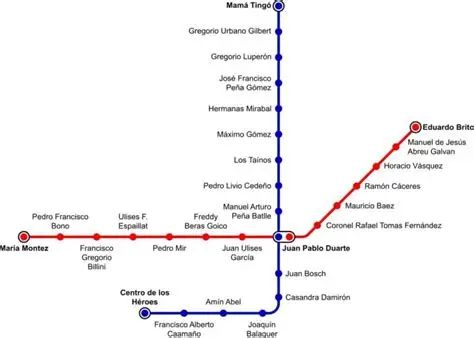
In 2009, Line 1 of the Santo Domingo Metro was inaugurated, and Lines 2A and 2B in 2013 and 2018 respectively.
In February 2005, when the Dominican government announced the construction of a railway transportation system for the capital, few imagined that that decision would mark a before and after in the urban mobility of the country. On September 11, 2005, the Executive Branch, with Decree No. 477-05, created the Office for the Reordering of Transportation (OPRET) with the purpose of designing and constructing the integrated rapid and mass transit system. What began as a controversial proposal, questioned for its cost and timing, is today one of the most used and debated infrastructures in Greater Santo Domingo. Almost 20 years later, the Metro SD not only continues to operate, but also continues to expand under the banner of different presidential administrations."Leonel's Madness"
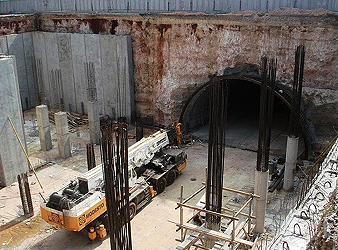
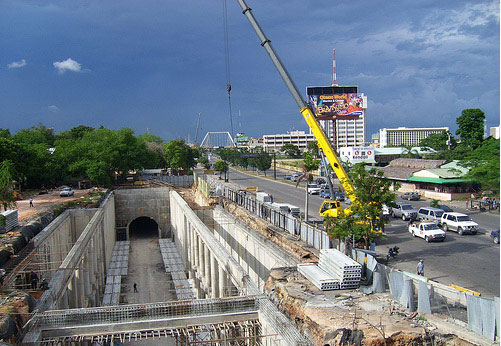
The idea officially took shape on February 2, 2005, during the term of then-President Leonel Fernández. The project was presented as a structural solution to traffic congestion and the chaos of public transportation in the capital. The first line would run along Máximo Gómez Avenue in a north-south direction, connecting the Heroes' Center with Santo Domingo Norte. From the outset, the announcement sparked intense debates. Urban planning experts questioned the orientation of the route, pointing out that the greatest flow of passengers occurred in an east-west direction. Transportation unions expressed their rejection, considering that the new system would affect thousands of traditional drivers. In the business sector, the National Council of Private Enterprise (Conep) described the project as inopportune in the face of urgent needs in education and health. Internationally, the International Monetary Fund (IMF) warned that the work was not contemplated in the current Stand-By agreement, which raised questions about its fiscal impact. However, the authorities defended the State's sovereignty to decide its investment priorities. The initial estimated cost of more than 300 million dollars was soon exceeded, fueling criticism. However, the Government insisted that the work would generate jobs and modernize urban infrastructure. The January 29, 2009 marked the inauguration of Metro Line 1, after almost four years of construction. With 14.5 kilometers in length and 16 stations, the line connected the Centro de los Héroes with Charles de Gaulle Avenue in Santo Domingo Norte. The investment exceeded 700 million dollars.
Abinader: Expansion towards the west
Currently, the system continues to expand under the management of President Luis Abinader. The construction of Line 2C towards Los Alcarrizos seeks to extend coverage to the west of Greater Santo Domingo, integrating new communities into the railway network with 5 stations, a 6.5-kilometer marginal road parallel to the Duarte Highway and a 940-meter tunnel. The stations that make up the project are station 1 Pedro Martínez located on Duarte highway corner with Los Beisbolistas avenue in Manoguayabo. Station 2 Franklin Mieses Burgos located on Duarte highway corner with Monumental avenue. Station 3, 27 de Febrero located at kilometer 13 near the Prolongación 27 de Febrero. Station 4 Freddy Gastón Arce located at kilometer 14 next to the pedestrian bridge and station 5 Pablo Adón Guzmán located at the entrance to Los Alcarrizos. This phase has also involved technical and financial challenges, as well as operational adjustments to respond to the sustained increase in passengers. The modernization of the system includes capacity expansions, the incorporation of new trains, and improvements in key stations. Over two decades, the Santo Domingo Metro has influenced urban dynamics. It has modified mobility patterns, reduced travel times, and contributed to reorganizing public transport. Furthermore, it has generated changes in the surroundings of the stations, boosting commerce and real estate appreciation in nearby areas. However, it has also faced challenges such as saturation during peak hours, the need for greater integration of train cars, long lines, blackouts that paralyze its operation, and pressure on the state subsidy that supports its operation. The history of the Metro demonstrates that major public works often arise amidst controversies. What in 2005 was considered by some as a risky bet, today is a consolidated infrastructure, although not without criticism.20 years after its announcement, the Santo Domingo Metro is not just a transportation system, it is a reflection of the political, economic, and social transformations of the country.