
 Spanish

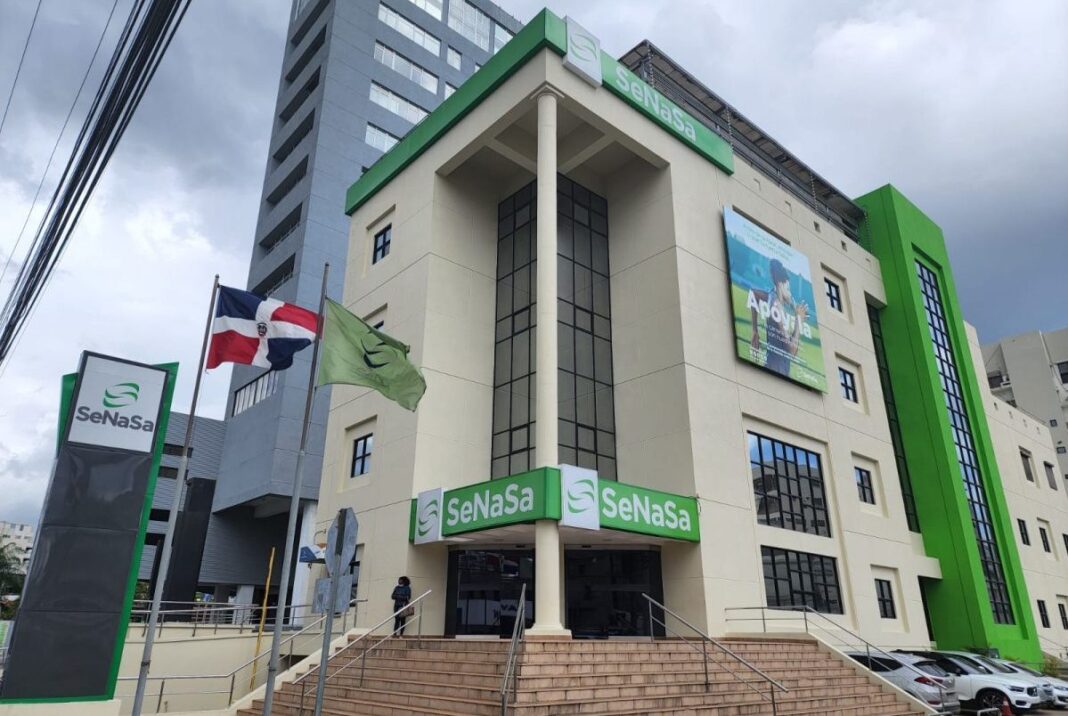

Santo Domingo.- The Public Ministry presented a file of more than 537 pages detailing step by step how a multimillion-dollar embezzlement would have been executed within the National Health Insurance (SENASA) between 2020 and 2025.
According to the investigation, the structure would have been orchestrated by the then CEO, Santiago Marcelo Hazim Albainy, along with a network of officials, advisors, businesswomen, and related suppliers.
The file reveals a continuous pattern of 30% bribes, illegal awards, the creation of committees without legal basis, inflated contracts, companies without authorization, and massive payments for services that the population never received, including telemedicine, nutrition, primary care, and subsidized "ghost" programs.
According to the prosecution, this is how the scheme was built:
The Public Ministry affirms that, since before August 2020, Hazim Albainy had already established economic agreements and commitments with businessmen who would later become privileged suppliers of SENASA.
Between June and August of that year, before officially taking office, irregular movements were already documented, such as the acquisition of a Lincoln Navigator vehicle financed by the businessman José Pablo Ortiz Giráldez, one of the main operators of the scheme. The purchase, according to the prosecution, was concealed through third parties, including the bank account of Ortiz's wife.
That same month, he initiated formal contact with Cinty Acosta Sención, who presented him with projects that would later lead to millionaire contracts for the company Nutrimed. The Public Ministry maintains that the relationship would have been built on future economic benefits.You may be interested in: 5 million for telemedicine services in the Senasa case
Upon assuming office in August 2020, Hazim Albainy would have moved quickly to secure absolute control over internal processes. According to the file, he arbitrarily created the Medical Contracting Committee, composed of close collaborators, including Francisco Iván Minaya, Germán Robles Quiñones, Roberto Canaán, Carmen José Velázquez, and Gustavo Guilamo. The prosecution indicates that this committee had no legal basis or regulatory support, and was used to approve "handpicked" contracts, without technical evaluations or eligibility criteria.The Nutrimed case: actions, contracts and bribes
In September 2020, Cinty Acosta Sención acquired 50% of Nutrimed's shares, through which shareholder agreements were created that were directly related to her privileged access to programs within SENASA. After the contract was signed, a bribery scheme of 30% of the amount of the monthly payments would have begun. In February 2021, when the original contract was terminated, José Pablo Ortiz Giráldez demanded, on the orders of Hazim Albainy, that Acosta pay 30% of the gross amount to maintain the program. The file indicates that the structure would have received RD$1,165 million only from Nutrimed in the form of bribes.The KHERSUM case: exorbitant payments for services not rendered
One of the most voluminous chapters of the file corresponds to the company KHERSUM S.R.L., identified as the main vehicle for the extraction of public funds. In October 2020, barely a month after the defendant's appointment, an addendum was signed that increased the monthly payments to the company to RD$5 million, an increase that the Public Ministry called "unjustified and irrational", as it multiplied the original allocation by more than 16 times. Weeks later, another addendum incorporated the Subsidized Regime, bringing payments to RD$65 million monthly for a supposed coverage of 500,000 affiliates. The forensic audit reveals that:- There was no list of beneficiaries
- There were no usage reports
- Telemedicine calls were not recorded
- Clinical records did not exist
- There was no technical evidence to justify the payment
Ghost Telemedicine Health Services
The forensic medical audit found that only 4.2% of the affiliates reported by KHERSUM received some service. In the telemedicine modality, which SENASA promoted as "innovative", the Public Ministry concluded that RD$5 million were paid monthly for alleged consultations, services were invoiced without evidence, there were no platform records, users or connection times, and impossible simultaneous appointments were reported. The population never received the services for which the State paid more than RD$1,800 million. The file details three irregular contracts: Flavorheart, DELESTE and FARMACARD Flavorheart Food Parts S.R.L. contracted from 2021 to 2022: contracted for the Nutrisalud program without having sanitary authorization. Received RD$1.606 million. In addition, its accounts were used to triangulate USD$83,000 to buy a Rolex watch for Hazim Albainy. DELESTE S.R.L. with a contract in effect since 2022: contracted per capita at RD$130 per affiliate. 17 of its 21 centers coincided with KHERSUM, which allowed them to charge twice for the same affiliates. The Public Ministry qualifies it as a duplicate payment scheme. FARMACARD S.R.L.: directly contracted in 2025, violating Law 340-06, made capitation payments of RD$168.85 per affiliate. According to the file, it documents irregularities from the accreditation process to the execution. Between 2022 and 2025, the CFO Gustavo Enrique Messina Cruz would have systematically manipulated the bordereau, hiding more than RD$14.34 billion in debts associated with technical reserves. The Public Ministry maintains that this adulteration allowed the real deficit, fraudulent payments, and the extraction of funds through bribes to be concealed. The Public Ministry indicates that the network operated without interruption until August 2025, when Hazim Albainy left the direction of SENASA and estimates that the total embezzlement, including bribes and irregular payments, exceeds RD$10 billion, bribes paid to the structure total RD$2.786 billion, services paid but not provided (telemedicine, nutrition, subsidies) exceed RD$3 billion, accounting concealment represents more than an additional RD$14 billion The Public Ministry's file maintains that the SENASA case constitutes an example of how the combined use of rigged contracts, shell companies that issued fictitious invoices, payments without evidence, and manipulation of financial records, money laundering that allowed funds destined for public health to be systematically diverted for years.




