Bávaro, La Altagracia. – Residents and merchants of Los Corales street, in the tourist area of Bávaro, denounced the advanced deterioration in which this important road is found, a situation that they assure directly affects vehicular traffic, commercial activity and the safety of those who circulate through the area. According to the community members, the […]
Santo Domingo,.- President Luis Abinader inaugurated this Saturday the Regional University Center of the Autonomous University of Santo Domingo (UASD) in Neiba, Bahoruco province, becoming the fifth university city of the state academy and a work that significantly expands access to higher education in the southwest region. The work will directly benefit more than 1,200 […]
Santo Domingo.- De Último Minuto will be providing special coverage of the reference event in the tourism sector and the leading fair for inbound and outbound markets worldwide, Fitur 2026 at IFEMA in Madrid, Spain. The team made up of journalists Wendy Mora, Ana Luisa Peguero and Cristian Santana, will be responsible for sharing all […]
Santo Domingo.- Carolina Mejía welcomed the approval in the United States House of Representatives of the initiative to extend the HOPE/HELP programs that allow Haiti to export some products to that country with tariff benefits, considering that it is a measure consistent with the need to promote employment, production and institutionality in the Haitian nation. […]
Santo Domingo.– The Dominican Institute of Meteorology (Indomet) reported that a weak prefrontal trough will be causing some passing showers, between weak and moderate, during this Saturday in several provinces of the country, with a gradual reduction in rainfall compared to yesterday. During the morning hours, showers accompanied by isolated wind gusts will be recorded […]
SANTO DOMINGO.- The National Sports Federations participated this Friday morning in the workshop on Good Practices of Transparency and Accountability, jointly given by the Ministry of the Presidency and the Chamber of Accounts of the Dominican Republic. You may be interestedr:They hold a panel with Nelson Cruz, recognize Yasser González and invite Luis Arraez Around 70 […]
SANTO DOMINGO. The Dominican Olympic Committee (COD) will hold a mass this Thursday, January 15, on the occasion of the 15th anniversary of the death of engineer Roque Napoleón Muñoz (Polón), a prominent sports leader and former president of that organization. You may be interested in: Courtney and the bullfighting relief hold the Toros against […]
Santo Domingo.– The President of the Republic, Luis Abinader, assured this Tuesday that the preparations for the XXV Central American and Caribbean Games Santo Domingo 2026 are progressing as planned and with satisfactory results, after heading a meeting with the members of the Organizing Committee and officials of entities linked to the event. The president […]
WASHINGTON.– The U.S. Supreme Court, with a conservative majority, showed a clear inclination this Tuesday to support state laws that prohibit transgender athletes from competing on women's teams in schools and universities. You may be interested in:Borja Iglesias responds with irony to homophobic insults received in Seville During more than three hours of hearing, the […]
Santo Domingo.– The Minister of Defense, Lieutenant General Carlos Antonio Fernández Onofre, ERD, swore in the members of the Organizing Committee for the 55th edition of the Sports Games of the Armed Forces and the National Police, in an act held on the front esplanade of the Ministry of Defense. During the ceremony, the high […]
The music streaming company Spotify announced an increase in the cost of its Premium subscriptions for the United States, effective from February 2026, which will directly impact millions of platform users. The adjustment covers the Individual, Duo, Family, and Student plans, and subscribers were notified through official channels. This move, announced on the company's press portal, […]
Samsung is ready to become a provider of 5G modem chips for Tesla's electric vehicles, starting with its Robotaxi line in Texas, United States. This was announced by The Elec. Although the South Korean company already supplied components to Tesla, this will be the first time it supplies 5G connectivity chips to the electric car manufacturer, […]
Truth Social is presented as Donald Trump's alternative in the social media ecosystem, aiming for a space of conversation without restrictions and with a structure that resembles Twitter in many ways. Launched by Trump Media & Technology Group (TMTG), the platform emerges as a direct response to the blocks suffered by Trump on other networks and […]
Madrid.- The social network X, formerly Twitter, has stopped working normally in several countries, including the United States, Spain, and France, around 3:15 p.m. (2:15 p.m. GMT) for reasons still unknown. Users of the social network have reported to the page Downdetector problems with the service both in the mobile application and in its web […]
Beijing.- A Chinese application called '‘Have you died?’, created so that people who live alone periodically confirm their status through a simple daily registration, has become one of the most downloaded paid apps in the country and has reopened the debate on loneliness in a society marked by aging and the rise of single-person households. […]
Havana.- The President of Cuba, Miguel Díaz-Canel, warned this Friday to the U.S. that there will be no possible understanding or negotiation with "coercion" and indicated that his country is willing to "dialogue", but on "equal terms" and with "respect". This day, the second and last of tribute after the arrival in the country of […]
Washington/ Caracas. – The United States held discreet talks with Diosdado Cabello, one of the most powerful men in Chavismo, months before the capture of Venezuelan President Nicolás Maduro, which occurred at the beginning of January 2026, according to sources cited by the Reuters agency and several international media outlets. According to the report, the […]
Rome.- An eighteen-year-old student died last night after being stabbed in front of the classroom by a classmate at a high school in La Spezia, in the Liguria region, in northwestern Italy. Youssef Abanoub, an Italian of Egyptian parents, was transferred to the emergency room of the Sant'Andrea Hospital after being stabbed and subsequently operated […]
Buenos Aires.- The President of Argentina, Javier Milei, announced this Saturday the invitation from his US counterpart, Donald Trump, to join the Executive Board for Peace for Gaza, a gesture for which he has publicly expressed his gratitude. Through his X account, Milei said: "It is an honor for me to have received tonight the […]
Puerto Rico.- The President of the United States, Donald Trump, granted a full presidential pardon to the former governor of Puerto Rico, Wanda Vázquez Garced, who had been convicted of federal corruption, as well as to her two co-defendants in the case: the Venezuelan banker Julio Herrera Velutini and the financial advisor Mark Rossini. The […]
Through social media, the team of the legendary artist Wilfrido Vargas shared a statement denying the false information that the artist had died after losing the battle against cancer. In the statement, the artist's office publicly thanked the displays of affection and concern, followed by categorically denying the false information that has circulated on social […]
Gets ready to start his successful European tour Santo Domingo, RD. — Venezuelan salsa singer Lemar presents his most recent musical release, “Para Siempre,” a salsa adaptation of the renowned song by Puerto Rican singer-songwriter Kany García, in an artistic exercise that honors the essence of the original song from a new sound. Based in […]
Mexico City, Start the year with everything! Julián Gil takes the stage in 2026 with Somos Familia, a new production by TelevisaUnivision, by joining the cast of the new proposal by producer Ignacio Sada, whose premiere is scheduled for Las Estrellas and ViX in the second quarter of the year. With this project, the actor […]
Puerto Rican singer Daddy Yankee is once again in the spotlight of controversy after being linked to a lawsuit for alleged fraud, conspiracy, and breach of trust, related to a million-dollar business of padel courts. The legal action was filed by the Spanish businessman León Fernando Fixman, who claims to have been irregularly excluded from […]
Santo Domingo.- The humorist and actor Juan Carlos Pichardo Jr. celebrated this Thursday the arrival of his second child, a boy who will be named Juan Manuel Pichardo Paniagua, the result of his marriage to Carmen Paniagua. The news was shared by Pichardo himself through his social media, where he published several photographs with his […]
A country can ignite from a chat: WhatsApp sets the agenda before the media. A single forward surpasses any headline. In the digital age, the real information crisis doesn't ignite in the newsrooms of a media outlet, nor on the front pages of newspapers: it begins in a simple WhatsApp chat. Before any media outlet […]
In the Dominican Republic, presidents don't fall because of the opposition. They fall because of something more intimate and devastating: their own family. When corruption shares the same last name as the presidential band, it ceases to be a case and becomes a sentence. It's not a contract that is judged: it's the entire credibility […]
In 2015, an internal crisis within the Dominican Liberation Party (PLD) forced the leadership of that organization to promote a constitutional reform to enable President Danilo Medina, who had been elected in 2012 through a constitution that prohibited consecutive re-election. Medina was eligible to try to return in 2020, that is, after a period, a […]
For days, Leonardo Aguilera has been the target of a campaign as evidently coordinated as it is poorly executed. Defamation, slander, and half-truths circulate on networks and certain media with suspicious synchronicity. Who's sending them? Who's biting their nails? The formula is old: fabricate scandals where they don't exist, repeat lies until they seem like […]
In 2025, live news streaming via YouTube on smart TVs leaves traditional television behind and transforms news consumption in the Dominican Republic.By: Pavel De Camps Vargas Who's dominating your home screen today? It's not traditional television. In the Dominican Republic, YouTube has taken over the television in this 2025, redefining the map of news consumption. […]
Santo Domingo.– The Dominican Republic leads the ranking of projected growth of the Gross Domestic Product (GDP) real in Latin America for the year 2026, with an estimate of 4.5%, according to data published by the magazine Mercado, based on the World Economic Outlook of the World Bank. According to the report, the country is […]
Santo Domingo.- The most consumed fuels, such as gasoline, diesel, and propane gas, will maintain their prices for the week of January 17 to 23, 2026, the Ministry of Industry, Commerce and Mipymes informed this Friday. In that order, premium gasoline will be sold at RD$290.10 per gallon; regular at RD$272.50 per gallon; optimal diesel […]
Washington.- US President Donald Trump said Friday that he might impose a tariff increase on nations that do not accept his plans to take control of Greenland, arguing that the island is central to US interests. "I may put a tariff on countries that don't accept the Greenland thing because we need Greenland for national […]
IDB Invest approved a financing package of up to US$80 million for Banco Múltiple Promerica de la República Dominicana, S.A. (“Promerica RD”) with the aim of expanding access to credit for small and medium-sized enterprises (SMEs), and for green sustainability projects. The operation seeks to boost economic growth, supporting underserved segments and promoting sustainable investments. […]
The Central Bank of the Dominican Republic published the reference prices for the purchase and sale of the US dollar for this Thursday, January 15, 2026, as follows: In financial institutions, the dollar was quoted for purchase at RD$62.35 and for sale at RD$64.11. These figures represent almost total stability compared to the previous day, […]
On Saturday afternoon, the groundbreaking ceremony for the Ocean Paradise project took place, officially marking the start of construction of one of the most promising real estate and tourism proposals in the Dominican Republic, strategically located in the Uvero Alto area, east of the country. The event took place in a pleasant and formal atmosphere, […]
La Altagracia.- The twenty-fifth edition of the Gran Concierto Altagraciano in the Basilica of Our Lady of La Altagracia, paid tribute to the patron saint of the Dominican people, through the musical excellence of the National Symphony Orchestra, under the direction of maestro José Antonio Molina, and the special performance of the renowned saxophonist and […]
More than 1,600 people impacted by their 2025 Community Medical Missions La Altagracia.- The Puntacana Group reaffirms, once again, its commitment to the health and well-being of the communities in its environment, through the free medical care provided by its Puntacana Foundation (FPC). During the last year, the foundation carried out four Community Medical Missions, […]
Santo Domingo.- The National Press Workers' Union (SNTP) announced this Thursday its action plan for the year 2026, with a view to strengthening that organization and defending the labor rights of its members. Manuel Ureña, general secretary of the SNTP, said to strengthen ties with the union's bases, for which they propose to hold the […]
A place between the Loma and the Atlantic Ocean that becomes a refuge for the traveler's soul. There is a corner located on the north coast, caressed by the breeze that tastes of salt and nostalgia, where the Atlantic merges with the land and leaves its mark on every stone, every wave, every soul. That […]
If anything has been highlighted by the prolonged Haitian crisis, it is the historical debt that the Dominican Republic has with its own border. The provinces that guard that line of more than 390 kilometers not only face the direct consequences of the collapse of the Haitian state, but have also been, for decades, forgotten […]
Without a doubt, the tourism sector represents one of the greatest successes of the governments of President Luis Abinader, an area that he already knew well before his arrival at the Presidency of the Republic, due to his experience as a local businessman. Since his swearing-in in August 2020, the Tourism Cabinet was implemented, coordinated […]
This July 4th, the United States commemorates the 249th anniversary of its independence, a date that marks the beginning of a nation forged in the fight for freedom, civil rights, and self-determination. Since then, this feat has been celebrated in multiple cultural expressions that exalt patriotic pride and the sense of national belonging. However, on […]
Today we proudly and gratefully celebrate the fourth anniversary of De Último Minuto, a project that was born with the firm conviction of transforming the way information is reported in the Dominican Republic. In these four years, we have witnessed —and been protagonists— of a revolution in digital journalism, marked by immediacy, technological innovation, and […]
On the eve of celebrating the fourth anniversary of De Último Minuto, we reaffirm our commitment to innovation, technology and, above all, to you: our readers. We are driven by the constant desire to evolve, to do things differently and to keep up with the times. Therefore, today we present two new products that will […]
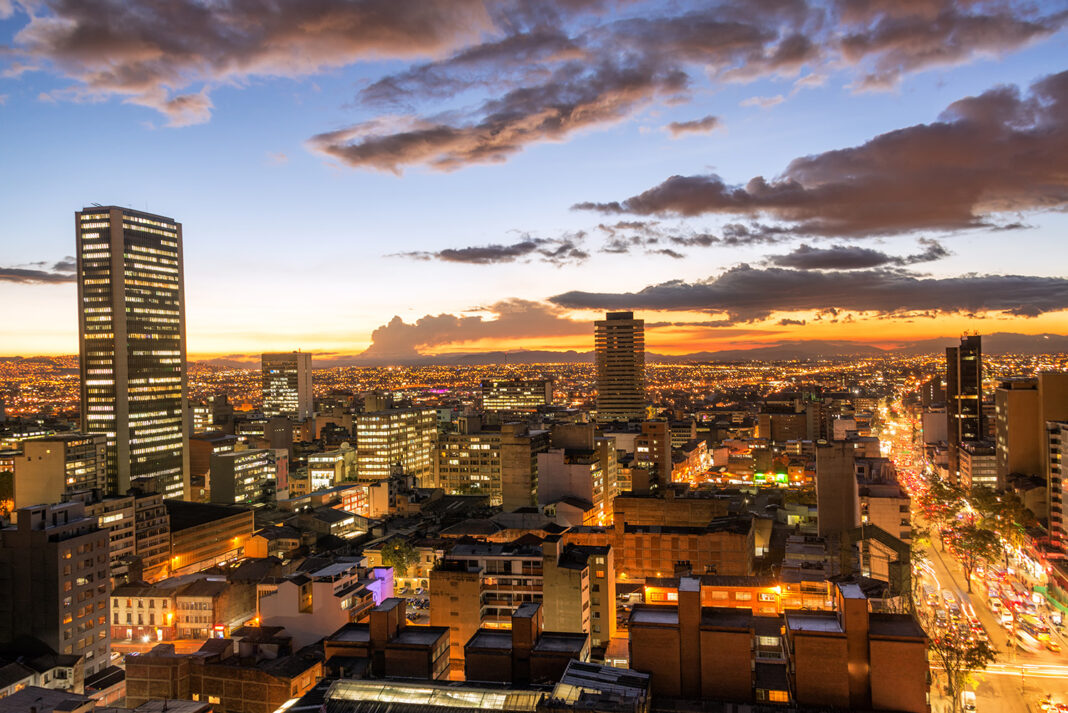
Bogotá, officially Bogotá, Distrito Capital, is the capital of the Republic of Colombia and of the department of Cundinamarca. Administered as a capital district, it has autonomy for the management of its interests and is made up of 20 districts. It is the main political, economic, administrative, industrial, artistic, cultural, sports and tourism center of the country.
Tourism and history of Bogotá: complete guide to the Colombian capital
Bogotá is located in the center of Colombia, on the homonymous savanna, in the Cundiboyacense altiplano, at an average altitude of 2,630 meters above sea level. It has an extension of 1,636 km² and an urban area of 378 km². It borders municipalities of Cundinamarca and the departments of Huila and Meta.
History
The territory of Bogotá shows evidence of human occupation for more than 11,000 years. In pre-Hispanic times, the region was inhabited by the Muisca, who developed a complex social organization and agricultural activities. On August 6, 1538, Gonzalo Jiménez de Quesada founded the city as the capital of the New Kingdom of Granada. During the viceregal period, Bogotá was the seat of the Audiencia and, from 1717, the capital of the Viceroyalty of New Granada. In the 19th century, the city was the epicenter of the independence movements and, after independence, it was consolidated as the capital of the Republic of Colombia.
Political-Administrative Organization
Bogotá is a first-order territorial entity, with administrative attributions similar to those of the departments. It is divided into 20 localities, each with its own local mayor and Local Administrative Board (JAL). The Capital District has bodies such as the Mayor's Office, the Bogotá Council, the Ombudsman's Office and the District Comptroller's Office. The city is home to the main bodies of the executive, legislative and judicial branches of the country.
Administrative division
The 20 districts of Bogotá group more than 1,900 neighborhoods. Each district has a JAL, whose members are elected by popular vote. The districts are subdivided into Local Planning Units (UPL). The city uses a nomenclature system based on streets, avenues, cross streets and diagonals.
Geography and climate
Bogotá is located in the Bogotá savanna, surrounded by the eastern hills, where Monserrate and Guadalupe stand out. The Bogotá River is the main tributary, accompanied by other rivers and wetlands. The climate is temperate mountain, with temperatures between 5 and 19 °C and an annual average of 13.7 °C. The city experiences two rainy seasons and two dry seasons a year.
Population and Ethnography
Bogotá has a population of over 7.5 million inhabitants. According to the census, 42.7% are mestizo, 36.5% white, 1.5% Afro-descendant, 0.5% indigenous, and 18.9% from other groups. The city has received internal and foreign migrants, mainly from Venezuela, the United States, Ecuador, Spain, and Argentina.
Economy
Bogotá is the main economic center of Colombia, with the highest nominal and per capita GDP in the country. It is the main destination for foreign direct investment and concentrates 21% of the companies registered in Colombia. The service, industry, commerce, and construction sectors are the most relevant. El Dorado Airport is the main cargo airport in Latin America and the second in passengers.
Transportation
The city has the TransMilenio system, TransMiCable, a network of bike paths of 532 km, and intercity transportation terminals. The first line of the Bogotá Metro and the RegioTram project are under construction. El Dorado airport connects the city with national and international destinations.
Education and health
Bogotá is home to 104 higher education institutions, including the National University of Colombia, the University of the Andes, and the Pontifical Xavierian University. The city has a network of hospitals and health centers distributed across three levels of care.
Culture
Bogotá is recognized for its cultural offerings, with around 90 museums, 70 art galleries, and numerous festivals. Highlights include the Gold Museum, the National Museum, the Botero Museum, and the International Book Fair. The city was designated World Book Capital by UNESCO in 2007 and Creative City of Music in 2012.
Sport
Football is the most practiced sport, with teams like Millonarios and Santa Fe. The city has venues such as El Campín Stadium, Simón Bolívar Park, and El Salitre Coliseum. Events such as the Bogotá Half Marathon and the WTA tennis tournament are held.
Tourism
Palacio Liévano
Bogotá is the main tourist destination in Colombia. Places of interest include the Plaza de Bolívar, La Candelaria, Monserrate, the Botanical Garden, the Planetarium, the Simón Bolívar Park and museums. The city offers a wide variety of accommodation and tourist services.
Gastronomy
Bogota's gastronomy includes dishes such as ajiaco, mazamorra chiquita, tamal, changua and desserts like figs with arequipe and cuajada with melao. The city has restaurants with typical, international and specialized food.
Symbols
The flag of Bogotá is yellow and red. The coat of arms was granted by Charles I of Spain in 1548. The anthem was written by Pedro Medina Avendaño and set to music by Roberto Pineda Duque. The walnut tree is the insignia tree and the orchid Odontoglossum luteopurpureum the representative flower.
Sister cities
Bogotá maintains sister city agreements with cities like Miami, Cádiz, Chicago, Seoul, Buenos Aires, Madrid, La Paz, Santiago, Washington, Brasilia, Quito, London, Istanbul, Caracas, Shanghai and Moscow, among others.
On Saturday afternoon, the groundbreaking ceremony for the Ocean Paradise project took place, officially marking the start of construction of one of the most promising real estate and tourism proposals in the Dominican Republic, strategically located in the Uvero Alto area, east of the country. The event took place in a pleasant and formal atmosphere, […]
La Altagracia.- The twenty-fifth edition of the Gran Concierto Altagraciano in the Basilica of Our Lady of La Altagracia, paid tribute to the patron saint of the Dominican people, through the musical excellence of the National Symphony Orchestra, under the direction of maestro José Antonio Molina, and the special performance of the renowned saxophonist and […]
More than 1,600 people impacted by their 2025 Community Medical Missions La Altagracia.- The Puntacana Group reaffirms, once again, its commitment to the health and well-being of the communities in its environment, through the free medical care provided by its Puntacana Foundation (FPC). During the last year, the foundation carried out four Community Medical Missions, […]
Santo Domingo.- The National Press Workers' Union (SNTP) announced this Thursday its action plan for the year 2026, with a view to strengthening that organization and defending the labor rights of its members. Manuel Ureña, general secretary of the SNTP, said to strengthen ties with the union's bases, for which they propose to hold the […]
A place between the Loma and the Atlantic Ocean that becomes a refuge for the traveler's soul. There is a corner located on the north coast, caressed by the breeze that tastes of salt and nostalgia, where the Atlantic merges with the land and leaves its mark on every stone, every wave, every soul. That […]
Lawrence, Massachusetts.— The city's mayor of Lawrence, Brian De Peña, recognized journalist Stephanie Hilario Soto through a proclamation, for her commitment and contributions to the responsible practice of journalism, as well as for her performance in Dominican media. During the event, the mayor highlighted the academic preparation, professional ethics, and versatility of Hilario Soto, who […]

 Spanish