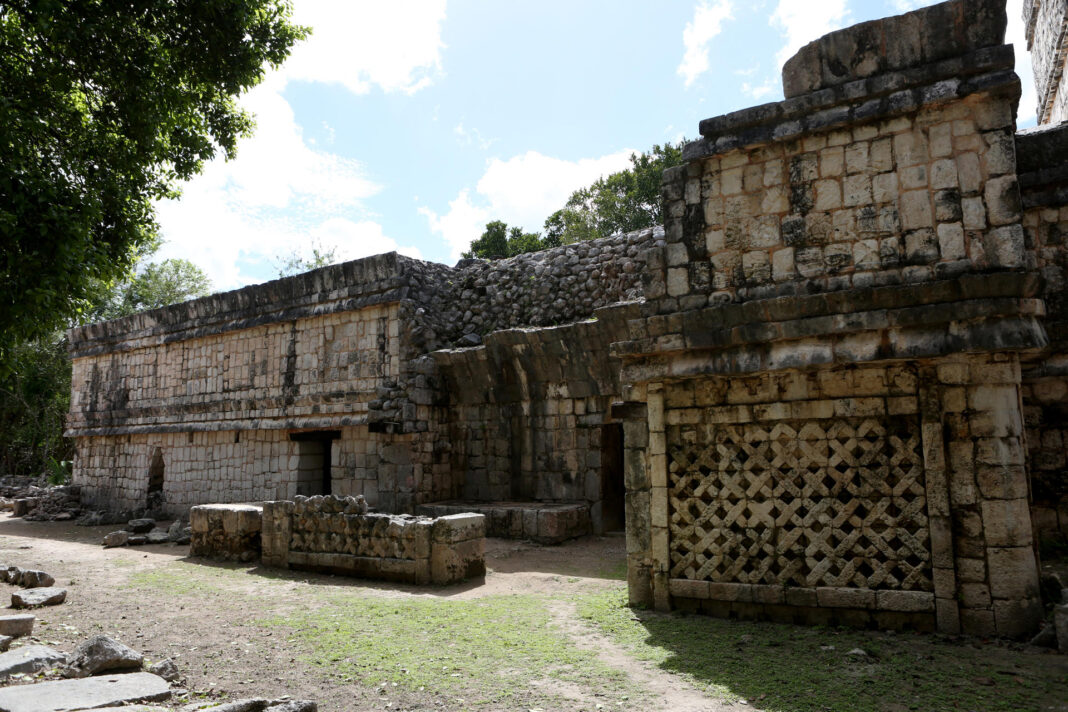
Valencia (Spain).- An international study in which the Universitat Politècnica de València (UPV), in Spain, participates, allows the identification of vaulted Mayan buildings using Lidar maps, a technology that makes it possible to "see" under the vegetation, which offers
"the key to understand Mayan urbanism".
This is what those responsible for this work, in which the architect and researcher from the PEGASO Center of the UPV Laura Gilabert participates, assure, and which is the result of a collaboration with Tulane University (New Orleans, United States) and the international consortium Pacunam Lidar Initiative.
In it, more than 2,600 square kilometers of jungle in the Mayan Lowlands, between Guatemala and Mexico, are analyzed, where more than 100,000 ancient structures have been detected, of which 30% have been identified as vaulted (linked to a higher status).
According to explanations from the UPV, the project, funded by the Valencian regional government, has discovered how to track wealth and status in ancient Mayan society using Lidar technology, by detecting vaulted structures and analyzing their territorial distribution in urban and rural environments.
To this end, the team has developed a predictive model, validated with 93% reliability, which allows the classification of old buildings according to their construction system, identifying those built with stone walls and vaults, a feature linked to greater wealth and social prestige.
New hypotheses about the organization of the Maya
The possibility of differentiating vaulted buildings from other simpler constructions allows for the formulation of new hypotheses about the social and economic organization of the ancient Mayan civilization, they explain from the academic institution.
The study thus offers new insights into the daily lives of thousands of people who lived in Mayan cities during the Classic period (250-900 AD).
One of the most relevant findings is that the Mayan elites tended to be located distributed among the general population, both in urban and rural areas, to supervise the use and exchange of resources.
"Until now it has been difficult to define the Mayan neighborhoods," says Francisco Estrada-Belli, archaeologist and researcher at Tulane University and leader of the study, who points out that being able to see the distribution of elite and non-elite residences on a large scale "gives the key to understanding Mayan urbanism."
"In this article we show how the combination of archaeological excavation, architectural analysis, and Lidar data allows us to obtain new perspectives on the organization of ancient Mayan society," points out Marcello A. Canuto, director of the Middle American Research Institute at Tulane University.
In addition to the buildings, Lidar technology has made it possible to detect agricultural and water management infrastructures, such as crop terraces, canals, and waterholes, findings that reinforce the idea of a high degree of territorial planning and a complex political organization.
"Lidar remote sensing allows optimizing the use of economic and human resources dedicated to archaeological research, as excavations can be planned in advance very precisely," indicates Laura Gilabert.
The UPV researcher adds that Lidar opens "new horizons in the conservation and management of archaeological heritage, especially when it is located under protected natural areas."

 Spanish