
 Spanish

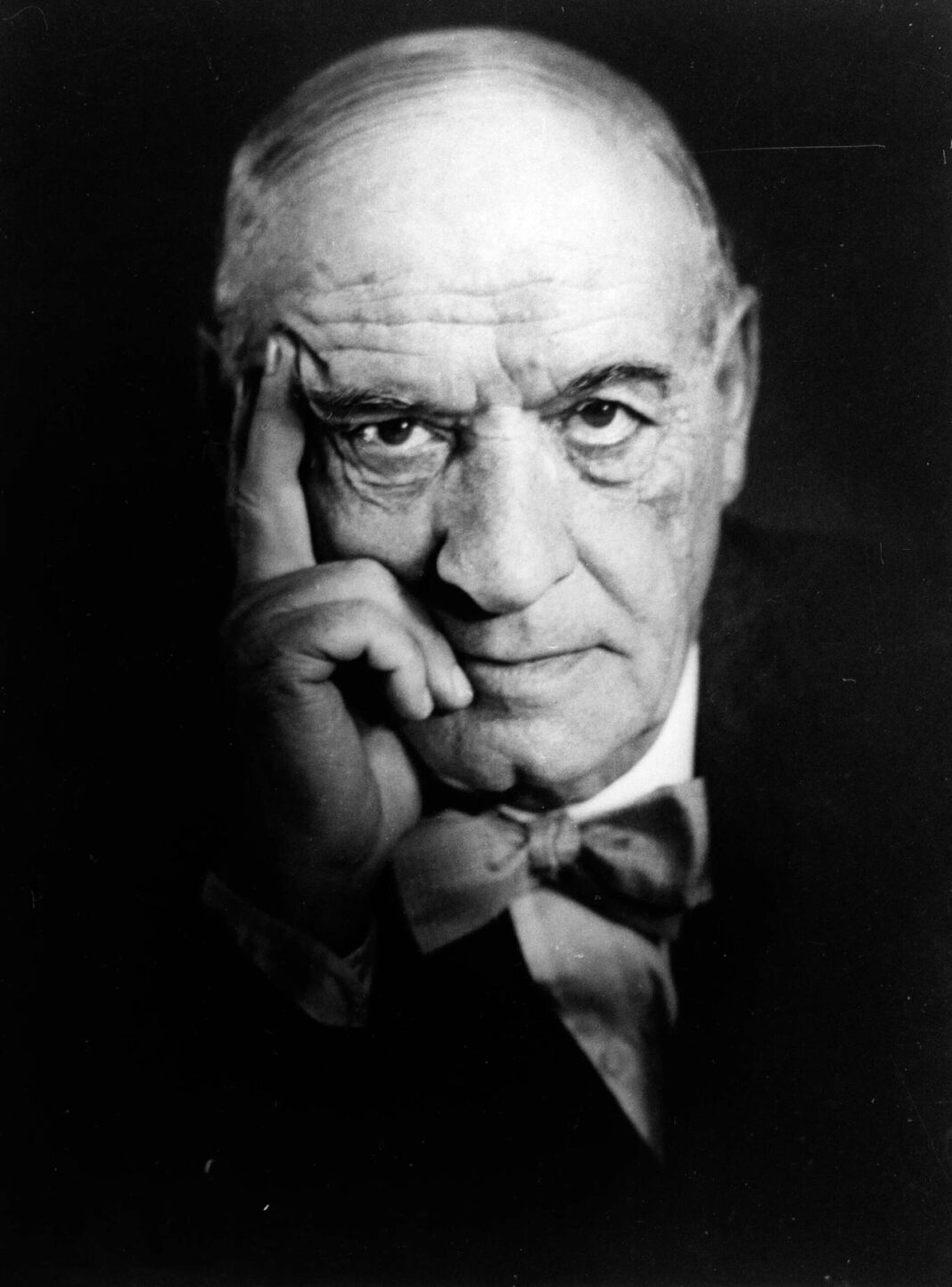

José Ortega y Gasset (May 9, 1883 - October 18, 1955) was one of the most influential philosophers of the 20th century in Spain, and his work covered areas such as philosophy, sociology, pedagogy, and politics. He was characterized by a vitalist and historical approach, which placed the human being in their concrete circumstance, understanding reality as a process in constant transformation.
Ortega was born in Madrid into a wealthy family. His university education began at the Central University of Madrid, where he studied Philosophy and Literature.
Later, he moved to Germany, where he attended the University of Leipzig and the University of Berlin, and associated with important philosophers such as Edmund Husserl and Max Scheler. This German education was key to his philosophical development, but it also allowed him to acquire a critical perspective on culture and education in Spain.
José Ortega y La Rebelión de las Masas
In 1930, Ortega published The Revolt of the Masses, a fundamental text that defined his vision of the social and cultural changes of the time. Through this work, he analyzed the phenomenal population growth in Europe in the 19th century, and how this phenomenon led to a democratization of leisure and well-being, but also to the rise of a new social figure: the mass-man.
This mass-man, according to Ortega, was an individual who believed he was entitled to everything without understanding the historical effort that had allowed his well-being. Unlike him, the outstanding-man aspired to be better, to live an authentic life and to develop an individual vocation, instead of settling for what was common and vulgar.
The Crisis of Beliefs and Technique
He also reflected on the crisis of beliefs that was afflicting contemporary society. Faith in science and progress, which had replaced religious faith during the Contemporary Age, was being questioned. For Ortega, technology, although it produced material advances and comfort, lacked meaning if it was not based on a solid scientific foundation that sought truth and explained reality.
This loss of interest in profound knowledge, according to Ortega, would lead Western civilization to barbarism. Science, understood as a desire to know the truth, should be the engine of human progress, not just the utilitarian application of technology.
The Pedagogy and the Mission of the University
This prominent philosopher also had a great impact on the field of education and from a young age, he showed concern for pedagogy, seeking to transmit to his students the love of knowledge. He defended a pedagogy of contamination, in which the teacher not only transmitted knowledge, but also infected his students with a taste for the truth.
His approach to teaching was very innovative: instead of focusing solely on specialized knowledge, he proposed that the university should train cultured men and good professionals, without trying to turn all students into scientists. To this end, he advocated for a university that would have a Faculty of Culture, which would teach students to understand the great disciplines of knowledge and to build a worldview that was consistent with historical reality.
In his work Mission of the University (1930), Ortega also presented a critical analysis of the Spanish university system, highlighting the need to reform higher education to make it more accessible and relevant to society. He proposed that the university should focus on the student and their vital needs, rather than on abstract knowledge.
His proposal included that students have an active role in the management of the university, contributing to the creation of a space for reflection and action.
Furthermore, Ortega defended the idea that the university should not be an exclusive privilege of the upper classes. He believed that, in order to promote social progress, it was essential that the working classes have access to higher education, which would only be possible through a reform of the State that guaranteed that possibility.
The Legacy of Ortega y Gasset

Ortega was a great promoter of culture in Spain, always seeking to democratize access to ideas and knowledge. Through initiatives such as the Revista de Occidente and the publishing house of the same name, he promoted a broad dissemination of the sciences, arts, and philosophy.
In addition, from institutions such as the Residencia de Estudiantes and the Junta para Ampliación de Estudios e Investigaciones Científicas, he collaborated on projects of great intellectual scope, which allowed the arrival in Spain of some of the most important scientists and writers of the time, such as Albert Einstein and Paul Valéry.
Ortega was a central figure in 20th-century Spanish culture, whose ideas continued to be an essential reference for understanding modernity and the role of the individual in society.
His philosophy, oriented towards concrete human life and its circumstances, sought to help man find his place in a constantly changing world, promoting critical and constructive reflection on reality.





