
 Spanish

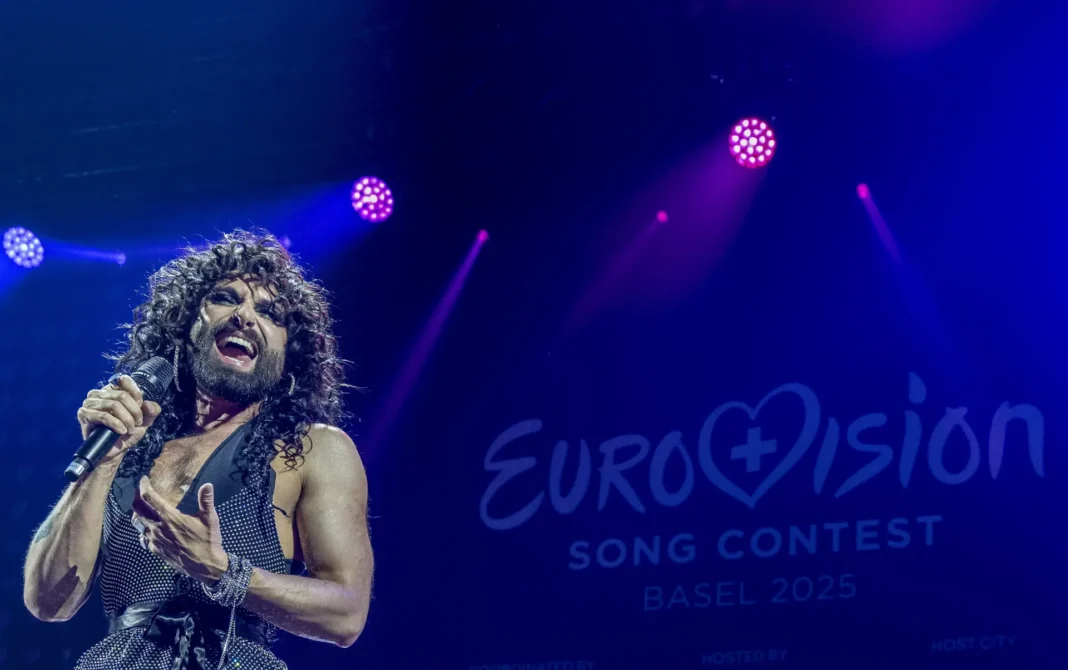

Editorial.- Eurovision, the longest-running and most emblematic song contest in the world, has an unexpected history in its origin. Far from the spectacle that millions of people follow each year, the Eurovision Song Contest was born in 1956 as a modest television experiment in a Europe still marked by the aftermath of the Second World War.
In the 1950s, while the continent was physically and emotionally rebuilding after the conflict, the newly founded European Broadcasting Union (EBU) sought ways to unite countries through television technology. The goal was not only to entertain, but also to heal. In turn, to foster peace, unity, and cultural exchange between nations still divided by recent wounds.
Read more: From representing Ukraine in Eurovision to defending it from a trench
It was in 1954 when the first proposal for a live transnational broadcast emerged. Initially, the plan was to create a variety show, with typical performances of the time's television, such as circus acts and acrobatics. However, an Italian proposal transformed the project, inspired by the San Remo Festival, they suggested organizing a song contest.
The idea was enthusiastically received. In 1955, during a meeting in Monaco chaired by Marcel Bezençon, then Director General of Swiss television, the format of the contest was officially approved. A year later, on May 24, 1956, Eurovision was born with a gala held in the Swiss city of Lugano, with the participation of only seven countries: Switzerland, Italy, Germany, France, Belgium, Netherlands and Luxembourg.
The performers, selected by each nation's broadcasting services, sang two songs live before an international jury. There was no televoting or large stage productions, only voice, orchestra, and a television signal that crossed borders. The rules were simple: songs of a maximum of three and a half minutes, a live orchestra, and the option of bringing their own musical director.
Curiously, the name that identifies the event today was not the original idea of the organizing committee. According to Eurovisión Spain, it was a British journalist who, almost unintentionally, christened it as 'Eurovision Song Contest'. The EBU would end up adopting the official name in French: 'Grand Prix Eurovision de la Chanson', which evoked the international spirit of the competition.
That technical and cultural experiment became an annual tradition that grew over the years, both in the number of participants and in artistic innovation. The contest opened to the participation of groups and choirs, and over time incorporated televoting, spectacular stage productions, and countless elements that catapulted it to the status of a global phenomenon.
Since the 2000s, nations outside of Europe have begun to participate, such as Australia, which debuted in 2015, and several former Soviet republics. As of today, the festival remains an event that not only celebrates music, but also symbolizes cultural diversity and unity across borders.