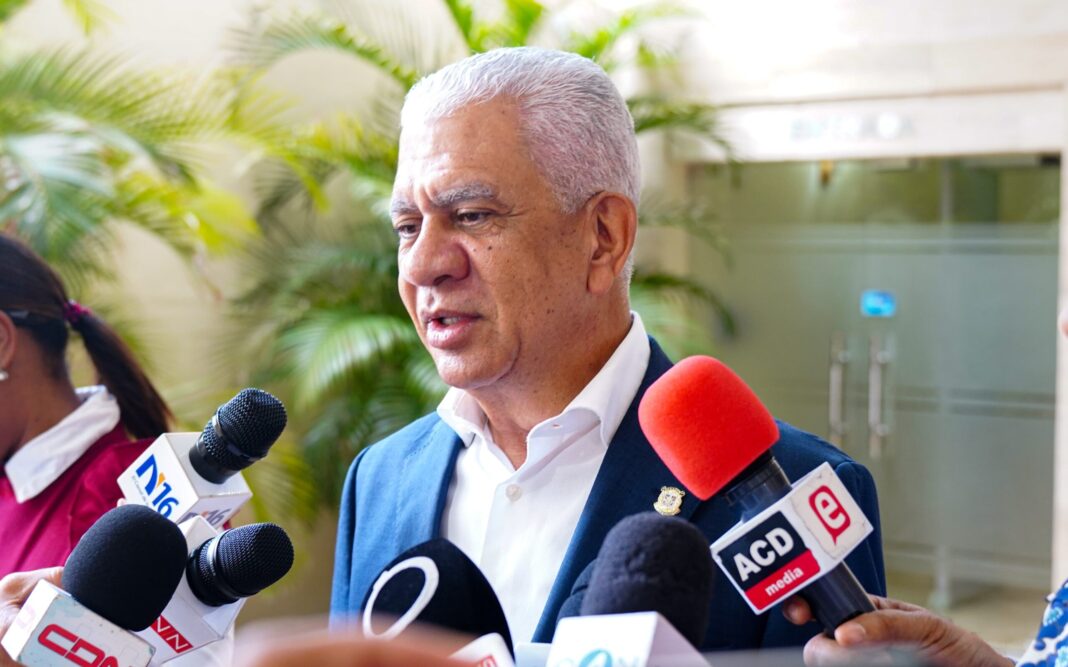
Santo Domingo.- The President of the Senate of the Republic,
Ricardo de los Santos, stated that Congress is willing to listen to and analyze the observations of the business sector regarding the draft modification of the Labor Code, recently approved in first reading.
The legislator's statements come in response to the statement issued by the main business associations of the country, in which they expressed their rejection of the reform for considering it regressive and contrary to the principles of balance and sustainability of the Dominican labor system.
De los Santos highlighted that the legislative process has not yet concluded and that the reform is subject to adjustments in its second reading.
"I have always said that what man does always
has room for improvement. We are open to analyze and discuss any disagreement that may exist in any sector," he assured.
The senator explained that one of the benefits of the bicameral system of the
National Congress is precisely to allow a broader analysis of legislative pieces.
"We are open to receiving all the observations you have and everything that is understood to be applicable, we are willing to do it," he said.
The Senate President reiterated that both the Labor Code and the Penal Code will continue their course in the legislative process and called on social sectors to actively participate.
"We tell the business community, all sectors of society, that if they have observations, we are receptive to receiving them, analyzing them, and, if necessary, improving what needs to be improved," he said.
Business Rejection
The business sector stated that the approved reform disregards important agreements reached within the framework of the tripartite dialogue and could have negative consequences for the national economy.
Among the points of concern, the entrepreneurs pointed out that the reform:
Increases labor costs significantly, especially affecting SMEs.
Discourages the creation of formal jobs in a context where informality exceeds 55% of the workforce.
Overloads judicial processes, generating legal uncertainty and weakening the investment climate.
Business associations urged Congress to resume the tripartite dialogue between employers, workers, and the Government, in order to build modern, equitable legislation adapted to the needs of the country.

 Spanish