
 Spanish

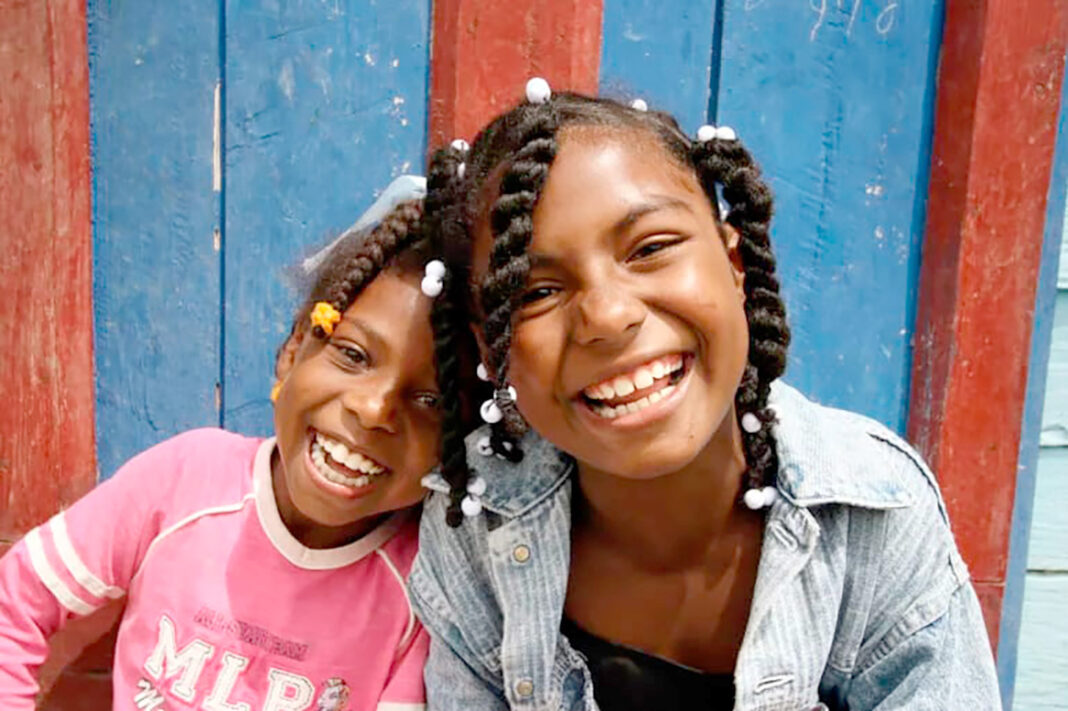

Santo Domingo, Dominican Republic.— She was only a month old when she arrived at the hospital with fractures to her skull, two ribs, and her shoulder. Her name cannot be published, but her story screams what many prefer to remain silent: in the Dominican Republic, childhood continues to be the victim of a violence that, many times, begins in the place that should be their refuge: the home.
What happens when the space that should protect you is the same one that hurts you? In the country, thousands of children and adolescents live this contradiction every day. The violence that hurts them doesn't always come from strangers: in many cases, it comes from their own parents, siblings, uncles, grandparents, or caregivers. People who, by law and by love, should be their shield, but end up being their biggest threat.
What is failing in the first circle of protection: the home?
Stories That Cannot Be Silenced
There are names that no longer need to be protected because, sadly, their lives were taken away before their time. Carlos Daniel Díaz Peña, Luis Gabriel, and Yuleidy Serrano Santana are part of this painful reality. Their stories shake and deeply question society. Carlos Daniel Díaz Peña, two years old, died last May in shocking circumstances. Photographs and testimonies from the mother showed clear signs of violence: burns on the fingers, bruises on the head and body, and a fractured arm. The death certificate indicates cerebral anoxia, contusion and cerebral hemorrhage, trauma and severe traumatic brain injury. The main accused: his stepmother. Luis Gabriel, also two years old, died on May 20th after receiving blunt force trauma in the Cristo Rey sector of the National District. The main suspect: his stepfather. Yuleidy Serrano Santana, five years old, died after being swept away by a stream while playing unsupervised. Her case exposes another form of vulnerability: negligence. These cases are not isolated incidents. They are part of a silent epidemic of violence and abandonment affecting Dominican children.The family: the first shield that sometimes fails
Faced with this worrying situation, the executive president of the National Council for Children and Adolescents (CONANI), Ligia Pérez Peña, called for reflection: "From CONANI, we urge all mothers and fathers to reflect responsibly on the decisions that impact the lives of their sons and daughters. Most of the aggressions towards children do not come from strangers, but from people close to them. Protection begins at home. The family must be the first shield of protection, never their first field of risk," he emphasized. Pérez Peña warned that when a case reaches CONANI it is because the family, that first circle of protection, has already failed.Data that alarms
According to a study by the United Nations Children's Fund (UNICEF), 64% of children between 1 and 14 years old in the Dominican Republic have suffered physical or psychological violence from their caregivers. This figure rises to 70% in children aged 3 to 4 years. A recent report by UNICEF Dominican Republic also highlights that 5.3% of injuries due to violence correspond to children and adolescents (NNA), a figure that has remained constant between 2020 and 2022, affecting males more. In addition, 8% of the cases presented to the prosecutors in recent years are related to the violation of the Child and Adolescent Protection Code.The Legal Consequences
Lawyer José Eliseo Almánzar explains that the abuse of minors can be punished with sentences ranging from one month to one year in prison and fines of five to ten minimum wages in the public sector. If the consequences of the damage are greater, the penalty is increased from two to five years in prison and fines of ten to twenty minimum wages. In cases of torture or acts of barbarity, the penalty can be ten to twenty years in prison. When the abuse causes the death of the minor, Law 136-03 classifies it as homicide or murder, with penalties of five to twenty years in prison, or up to thirty or forty years if there are aggravating factors such as premeditation or the relationship of kinship. These sanctions may also include the loss of parental authority, disqualification from holding public office, and the obligation of civil reparation.The Mental Health of Caregivers: A Determining Factor
Some recent cases show the connection between the deteriorated mental health of caregivers and acts of extreme violence. Last August, a woman, a first lieutenant in the Dominican Army, beheaded her six-year-old daughter. According to her statement, "some evil spirit" had led her to commit the crime. In May, in La Romana, a father found his two-year-old son lifeless. The mother, who suffered from mental health problems, confessed that a voice ordered her to commit the act. In June, another woman with apparent mental disorders was arrested after burning and killing her baby a few months old, an event that occurred in Azua. Psychiatrist and family therapist Carmen Ramírez warns about the importance of taking care of the mental health of those who raise children. Problems such as stress, anxiety, and depression affect the ability to provide safe and healthy parenting. "The child who grows up under patterns of violence or neglect learns that love hurts and may develop patterns of abuse or addiction in the future," explained Ramirez. The specialist recommends providing emotional, educational, and economic support to caregivers, ensuring dignified conditions, fostering family coexistence, establishing clear limits, and promoting physical, mental, and spiritual balance. "Spirituality is key to a balanced life. Taking care of the body, mind, and spirit is always a good formula," he concluded.Emotional consequences and warning signs
Clinical child and adolescent psychologist Ana Romero warns that abuse severely impacts self-esteem and the ability to establish healthy emotional bonds in childhood and adulthood. "The child tends to internalize the experience as if it were their fault, which generates insecurity, self-criticism, shame, and fear of rejection. As adults, these wounds manifest in dependent relationships or fear of trusting others," she explained. "Physical abuse can generate fear, aggression, and constant defensive responses. Emotional abuse leaves deep scars on self-esteem, and sexual abuse can cause anxiety, depression, sleep disorders, and difficulty establishing healthy relationships." Romero highlighted the warning signs that should trigger the attention of adults:- Sudden changes in behavior
- Sleep problems or nightmares
- Rejection of physical contact
- Sexual behaviors inappropriate for their age
- School difficulties without apparent cause
- Somatization (physical pains without medical explanation)
- Excessive fear of certain people or being alone
Responsibility is everyone's
Violence against children and adolescents is not just a family matter: it is the shared responsibility of the whole society. The environment must be alert and report any sign of abuse. The Attorney General's Office has the Life Line (809-200-1202) to report cases of violation of the rights of children and adolescents throughout the country. In the Dominican Republic, more than ten children are victims of violence every day, according to figures from CONANI and UNICEF. But behind each number there is a broken story, a family that could —and should— protect. The big question remains:What is failing in the first circle of protection: the home?





