
 Spanish

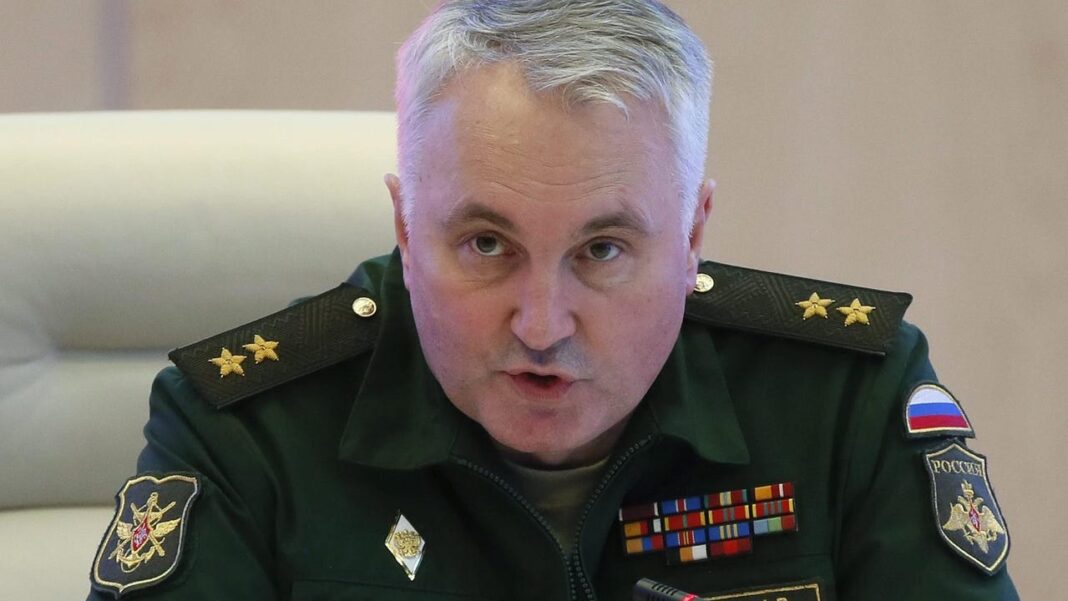

The head of the Defense Committee of the Russian Duma (House of Representatives), Andrei Kartapolov, defended this Wednesday the presence of Cubans in the ranks of the Russian Army in Ukraine, amid US denunciations of their massive participation in this contest.
"No one can forbid a normal Cuban patriot from loving Russia, because we were in Cuba so many times that there, really, the attitude towards our country is the warmest," he told the Russian press, pointing out that it is nothing strange that "young Cubans want to help our country."
Kartapolov welcomed "all those who want to help our country in its just fight against world fascism, those who want to join the Armed Forces of Russia."
Both chambers of the Russian Parliament ratified this week the intergovernmental agreement on military cooperation with Cuba, just as the United States denounces the massive participation of Cuban mercenaries in the war in Ukraine.
This ratification takes place days after the U.S. State Department distributed an internal memo to its diplomats denouncing that between 1,000 and 5,000 Cubans have been recruited as mercenaries for the Russian Army, making Cuba one of the main sources of foreign fighters.
"After North Korea, Cuba has become the largest source of foreign mercenaries for the Russian army," states the memorandum, which accuses Havana of having "failed to protect its citizens from being used as pawns in the Russo-Ukrainian war."
You may be interested in: Collapse on the terrace caused the fatal collapse of a building in Madrid
Last May, the Cuban Resistance Assembly denounced in Miami (USA) that Russia has recruited up to 20,000 Cubans, of whom between 200 and 300 had died, for the war against Ukraine, with the support of the Cuban Government.
Cuba and Russia, traditional allies since the Soviet era, have boosted their bilateral relationship in recent years and even more so now, when the island is experiencing its worst economic crisis in three decades, with shortages of basic goods and an inflationary spiral, accentuated by the structural weaknesses of its production and the recurrent failures of its electrical system.





